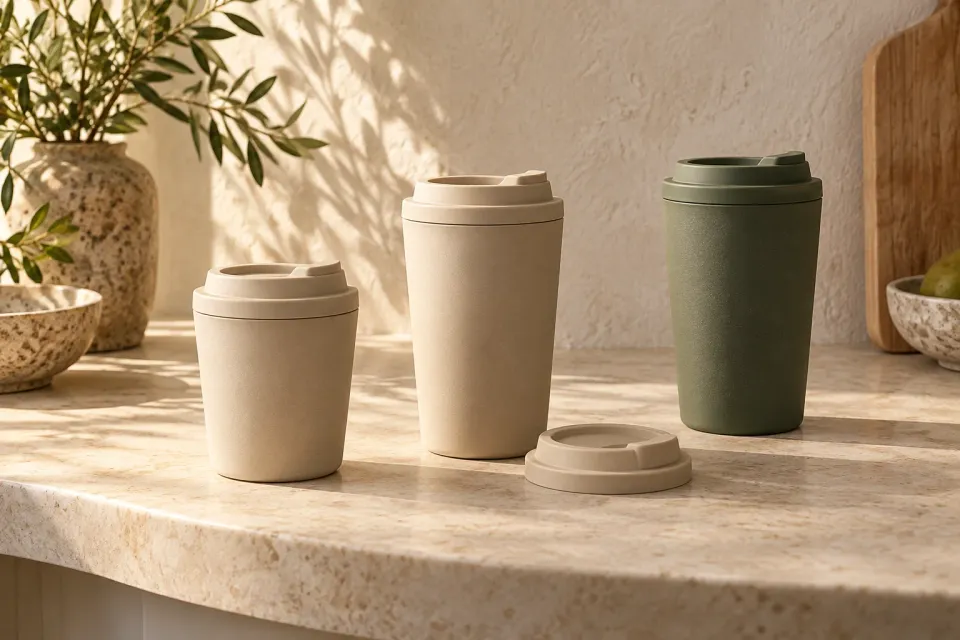
What does Dune Plus mean when someone is choosing a cup? Is it a colour, a larger capacity or an extra item in the package? In this hypothetical example, the name may feel obvious to the shop’s team. Someone arriving from a paid ChatGPT ad has only the advertised offer and the product page to work with.
A useful variant name makes the difference between options readable. It need not remove the brand’s own terminology, but it should explain the choice. This guide concerns labels. Making the link open the correct selection is a separate task covered by correct variant destinations.
Read the options without their photographs
Collect the names used in the ad, on the product page, in the selector and in the basket. Read them as one continuous list without images. If the options become indistinguishable when colour swatches disappear, the words need to carry more information.
OpenAI describes advertising content and destinations in Campaign Management. Product-feed ads use product information supplied by the feed. Product Feeds. Review both the name presented by the ad and the name the customer can subsequently select.
Write a short question for each variant dimension. Which colour does the shopper want? What capacity? Should the package include an extra lid? If two names answer different questions, they generally should not appear as equivalent alternatives inside the same selector.
Separate the display name from the identifier
An internal item code can be useful for stock management and investigation while remaining difficult to shop from. Preserve its relationship to the product data and write a customer-facing name describing the relevant difference. Do not humanise a code by guessing what its components mean.
A small working list can contain the identifier, source name, verified attribute and proposed display name. Ask the product owner to confirm the meaning before the label appears in advertising material. A code ending in L might identify a supplier series rather than the size large.
OpenAI says product identifiers should remain stable between feed uploads. Product Feeds. Improving the customer-facing wording is therefore not itself a reason to change product identity. Update the systems that use the text while preserving the verified relationship.
Describe the difference at the right level
Our fictional cup range has three independent choices: colour, capacity and package. These suggestions assume the details have been checked against the hypothetical range.
| Unclear label | Clearer display | The customer’s choice |
|---|---|---|
| Dune | Dune, sand beige | Colour |
| L | 750 ml | Capacity |
| Plus | Cup with extra lid | Package contents |
Keep Dune if it is the established variant name. Adding sand beige explains the type of difference the name represents. The colour word should not promise an exact shade on every screen. That issue belongs to the colour representation guide.
An explicit capacity is more useful than an isolated letter when capacity distinguishes the cups. A garment may still need a letter because it belongs to the sizing system. Link the selector to size and fit guidance rather than squeezing a complete measurement chart into its name.
Turn the shop's shorthand into a readable choice
- Dune → Dune, sand beige
Keep the colour name and explain the attribute it describes.
- L → 750 ml
State the verified capacity when capacity is the actual choice.
- Plus → Cup with extra lid
Name the package contents so the addition is understandable.
- Item code → separate product record
Keep the identifier for mapping while the display name explains the choice.
Keep separate decisions separate
A label such as Dune 750 Plus carries three attributes but requires the shopper to learn the sequence. Where the shop supports independent controls, give colour, capacity and package their own clear headings. Then show a concise summary of the selected combination.
Not every combination has to exist. When capacity limits the available packages, show which options remain selectable and explain the restriction. The name of an unavailable option should still make sense; otherwise the shopper cannot judge whether changing capacity would be worthwhile.
If the shop’s structure requires one combined list, use the same sequence throughout: colour, capacity, package. Avoid starting some rows with the bundle and others with the colour. Consistent ordering lets readers look for one attribute without interpreting the entire list again.
Keep promotional adjectives out of that structure unless they identify a real, defined difference. Calling one option advanced or premium does not tell someone whether it changes capacity, construction or contents. Explain the verified change next to the label when a brief name cannot carry it.
Preserve meaning in short spaces
Selectors, compact product cards and basket rows have different amounts of space. Decide which information must remain visible when the wording is shortened. Capacity or package contents should not disappear while a decorative series name survives.
Try the longest real option on a small screen. If the text is truncated, ensure the distinguishing information can be reached without first choosing the wrong product. Colour swatches need readable names, and a selected swatch should have text confirming the chosen colour.
The basket can show the product title and variant details on separate lines. What matters is that the shopper recognises the same combination seen on the product page. An internal abbreviation that appears only after adding the item makes the final check unnecessarily difficult.
Avoid treating a tooltip as the only explanation for a consequential difference. A shopper using touch or keyboard navigation should still be able to understand what the option includes. Check the actual control instead of assuming the full text remains available everywhere.
Translate the attribute while preserving identity
Decide which words are product names and which describe attributes. Dune may remain unchanged in both languages while the Swedish sandbeige becomes sand beige. Keep the identifier and actual variant consistent even when the word order needs adjustment.
Ask a reviewer to compare the language versions line by line. Check capacity units, quantities and package contents particularly carefully. A Swedish label implying an extra lid must not become an English label implying two cups. Fluent language is insufficient if the offer changes meaning.
Approve the names through a concrete choice
Give a colleague a specific task, such as selecting a sand-beige 750 ml cup with an extra lid from the fictional range. Ask them to identify the option and describe what the package contains. Then ask which combination appears in the basket.
Record misunderstandings beside the label that caused them. Correct its meaning or placement and repeat that particular choice. The wider product feed guide provides the catalogue context. The acceptance criterion here is concrete: the same verified product should remain understandable throughout the purchase decision, including to someone unfamiliar with the shop’s internal language.
Sources and scope
Design customer-facing variant labels that distinguish colour, size and package contents while maintaining their relationship to stable product identifiers.
Working methods and examples are editorial suggestions. Check current platform requirements and available features before implementation.