A relevant accessory answers an additional question left open by the main product. It might help a buyer organise luggage, protect an item in storage or make a particular use more convenient. A row of unrelated products answers no clear question, even when the retailer would like to sell them.
When a visitor arrives from a paid ChatGPT ad, the destination should first make the advertised item understandable. An optional complementary purchase can then be useful. Explain why it fits, who benefits and what the customer can decline. Accessory suggestions should not create uncertainty about the main product’s basic function.
Classify the relationship before recommending it
Check every proposed addition before placing it in a recommendation. One component may already be included. Another may be necessary for the advertised use. This guide treats an item as an optional complement only when the buyer can decline it and still obtain the use the main offer promises.
The required-accessories guide covers components that must be available. Those prerequisites need clear disclosure before purchase rather than being hidden among tempting extras. If a charger is necessary but sold separately, that relationship is a condition of the product’s use regardless of how appealing its recommendation card looks.
Check the exact bundle contents as well. Suggesting another unit of something already included may be reasonable when a customer needs more, but explain the quantity and purpose. Otherwise the suggestion can make the shopper question what the main purchase actually contains.
Express the benefit as a specific situation
Write one sentence for each accessory: this helps someone who wants to do a particular thing with the chosen item. Describe a real benefit and any relevant limitation. “Works well together” and “complete your order” are too vague to justify the selection.
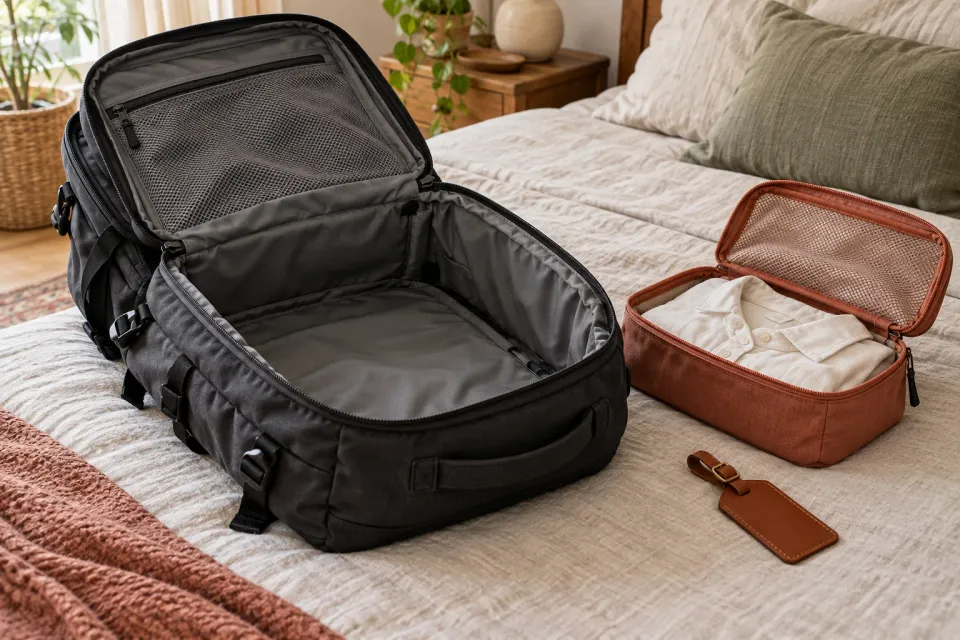
Use the main product’s documented function and choices the visitor makes on the website. There is no need to guess the conversation that preceded the ChatGPT ad. A page selling a travel backpack can explain an organiser for people who want to separate their belongings without claiming to know the visitor’s travel plans.
Limit the selection to suggestions whose differences you can explain. If three organisers serve the same purpose, shoppers need to see why they differ. The existence of more catalogue items is not itself useful decision evidence for presenting all of them at once.
Follow a hypothetical backpack example
Suppose a retailer advertises a backpack for short trips. It supports the advertised use without additional purchases. The retailer is considering a packing organiser and a separate name tag as optional complements. This is a constructed example, with no claims about real products.
The organiser’s card explains the belongings it can keep together and demonstrates verified fit in the selected backpack. The name tag’s card explains bag identification. Each shows a separate price and an explicit way to add it. The main backpack remains purchasable when neither accessory is selected.
A photograph of the packed bag deserves careful review. The shopper should be able to distinguish the removable organiser from the bag’s built-in compartments and recognise any props. If a larger organiser occupies different space, the explanation and photograph should follow that particular selection.
Creating these cards does not establish that the accessories increase sales. It creates an understandable offer that the retailer can assess through actual customer questions and order information. A hypothesis about usefulness and a measured commercial result are different things.
Verify fit before presenting the suggestion
A complementary accessory needs to work in the relevant combination. Check model, size and version where they affect use. Sharing a product category does not establish that two specific items fit together.
The compatibility guide addresses the evidence behind that relationship. In the recommendation itself, communicate the relevant conclusion clearly. If the combination applies only to a particular variant, make that qualification visible during selection.
When the customer changes the main product variant, the suggestion needs another relevance check. A previously selected accessory should not remain an unquestioned recommendation if its suitability has become uncertain. Explain the change and allow a fresh decision about the actual combination.
Keep a record of the relevant matching information rather than relying on a salesperson’s memory. Where suitability has not been verified, seek the missing evidence before adding the recommendation. A confident label cannot substitute for establishing the relationship.
How does the item relate to the main purchase?
- Already included
Explain the included quantity before suggesting another unit.
- Required for use
Disclose the dependency as a prerequisite before purchase.
Reconsider - Optional extra benefit
Justify the separate price through a specific complementary task.
Checkpoint - Unverified combination
Verify suitability before using the recommendation.
Reconsider
Make price and optional status clear
Show that the accessory is a separate purchase and how it changes the total. The buyer should be able to remove it while preserving the main item and other deliberate choices. A photograph with the accessory attached needs a clear explanation of what each price includes.
If there is a genuine bundle offer, its conditions and contents should correspond to that offer. Avoid implying a saving through comparisons between amounts that represent different goods or quantities. Keep the next decision manageable: add this for the stated extra use, or continue with the main product.
Changing to a more expensive main model is a different decision. The guide to the value of a higher model explains what a buyer gains through that switch. Mixing the comparison with accessories can force the customer to reconsider the entire product choice just to buy a small addition.
Also inspect the basket description. The final selection should distinguish the main item from each optional addition and preserve their quantities. An accessory should not reappear merely because the customer returned to the product page after removing it.
Review the relationship from the paid ad
OpenAI’s Campaign Management documentation describes ad content and destinations. Review the recommendation from the actual advertising address so that the main product remains clear when the visitor arrives.
The Product Feeds documentation describes product information used in ads. Your editorial relationship between two items still needs checking against the actual products. A catalogue selection does not by itself establish that an accessory is suitable.
Record the recommendation’s reason, verified combination and responsible product owner. Review the relationship when either model changes. The finished suggestion should explain an additional possibility while allowing the customer to complete the original purchase confidently without it.
Sources and scope
Select and explain optional complementary products that add a specific benefit to an already chosen item without being confused with required parts or bundle contents.
Working methods and examples are editorial suggestions. Check current platform requirements and available features before implementation.