A higher-priced model needs a reason the customer can evaluate. When a visitor arrives through a ChatGPT ad for a particular product, an upgrade should answer a concrete question: what would I receive beyond the advertised model, and when would that difference matter to me?
Treat the base model as a possible purchase throughout the explanation. The upgrade proposal should clarify the value of a change while keeping the original offer easy to choose. This guide addresses the decision to move to a higher model after the customer has found a relevant product type.
Write the need before the sales argument
Begin with an additional feature the higher model actually provides. Then describe the situation in which that feature would affect use. If no such situation can be stated, “more advanced” is a weak basis for recommending a more expensive purchase.
Use needs the visitor expresses on your website or that the published offer establishes. Do not infer existing equipment or private priorities from an ad click. Present the upgrade as a conditional choice: if this is something you need, examine this particular difference.
Write the opposite condition too. When would the additional feature be unnecessary for the intended task? A proposal that cannot explain when the base model is enough often needs a clearer boundary around its argument.
Examine the difference through a hypothetical desk
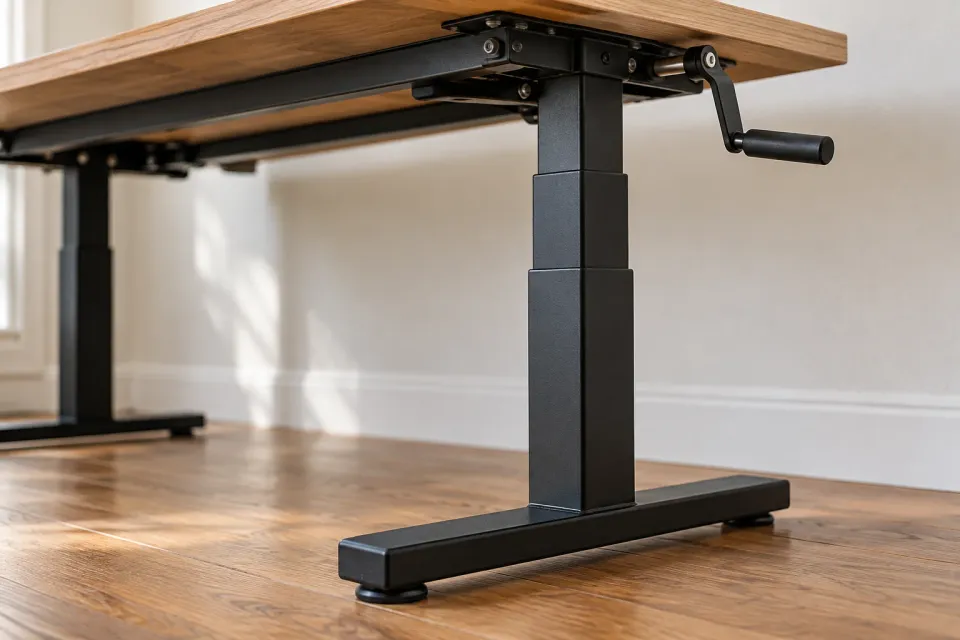
Imagine two fictional desks with the same work surface. Base has a fixed height. Adjustable provides documented height adjustment within a specified range. This example describes no real products and makes no claim about health outcomes.
For a buyer who wants to change working height during use, adjustment is a concrete feature to investigate. For someone who has chosen a suitable fixed height and does not need to change it, Base may remain sufficient. A higher price does not make the same feature necessary in both situations.
A useful explanation connects need, difference and condition. “Consider Adjustable if you need to change the desk height and its documented range meets your requirements” is more informative than “Choose Pro for the best experience.” Verify the range before using this argument in an actual product description.
Separate an additional function from an outcome claim
A documented feature can support an upgrade explanation without promising a business result. More settings do not automatically establish faster work, increased productivity or recovery of the additional purchase cost. Such claims require their own evidence.
Describe what someone can do with the feature. If the higher model offers a different adjustment, explain the available choice. Avoid turning the ability to make a choice into a guaranteed result from using it.
The same distinction matters when the difference is capacity. A larger number becomes relevant when it addresses a requirement. Recommending the largest model to everyone makes it harder to understand which requirements actually justify the proposal.
Also check whether the benefit depends on using another feature or purchasing something separately. The additional capability may be real while the proposed value remains conditional. Keep that condition attached to the upgrade argument.
Make the price difference inspectable
Show the price of the current base model and the selected higher version on an equivalent purchasing basis. When the packages include different accessories, explain that before describing their price difference as the cost of one additional feature.
Suppose, in a hypothetical calculation, Base costs SEK 1,500 and Adjustable costs SEK 2,300. The difference in this example is SEK 800. These are neither real prices nor estimates of advertising costs. The customer’s question is whether the documented adjustment is worth that difference for their intended use.
Include known additional requirements in the explanation. A particular installation, separate component or different delivery condition can affect the choice. “Only a little more” hides that assessment. Give the customer amounts and conditions so they can understand the difference without adopting the seller’s value judgment.
Explain what the higher model requires
An additional feature may accompany a larger product, more settings or different prerequisites. Check the actual information and put relevant changes near the upgrade proposal. The visitor should be able to judge whether the new capability also introduces a difficulty for their intended use.
In the desk example, the buyer needs to check the documented dimensions and conditions for Adjustable. Do not assume everything else is identical because two products belong to the same named range. State similarities only when the evidence supports them.
The complete product-model comparison table can carry the detailed attributes. The upgrade explanation selects the decisive difference and explains why it might matter. Choosing a fair basis for evaluation is covered in the guide to comparison criteria.
When is the upgrade relevant?
- No relevant need
The added function serves no stated need. Keep the base model as a choice.
- A need exists
Connect the function to the task and check documented conditions.
Checkpoint - The cost is clear
Show the price difference and additional requirements before changing models.
Checkpoint - Evidence is missing
Confirm the decisive fact before recommending the upgrade.
Reconsider
Make changing models a deliberate action
Show the proposal without automatically replacing the advertised selection. Opening information about a higher model does not necessarily mean choosing it. The model name, price and purchase action should identify which option the next step concerns.
Provide an understandable route back as well. If the visitor finds the added feature irrelevant, the base model should remain available. When the original product is unsuitable altogether, the selection belongs to the separate work on relevant product alternatives.
For a standard chat-card ad, start this review with the ad’s specified destination URL, documented in OpenAI: Campaign Management.
For product ads, the destination comes from the selected product according to OpenAI: Product Feeds. Check that the page’s upgrade proposal starts from the same model the customer arrived to investigate.
Review the argument in two situations
Ask a colleague to read the proposal as someone who needs the added capability and as someone who does not. Both should understand the price difference, conditions and next step. The review examines clarity rather than estimating future upsell revenue.
If both readings force the higher model, revise the argument. A finished proposal should help the appropriate customer choose an upgrade and give everyone else a clear basis for retaining the advertised model.
Sources and scope
Help advertisers justify or decline an upgrade based on the higher model's documented additional value for the customer's intended use.
Working methods and examples are editorial suggestions. Check current platform requirements and available features before implementation.