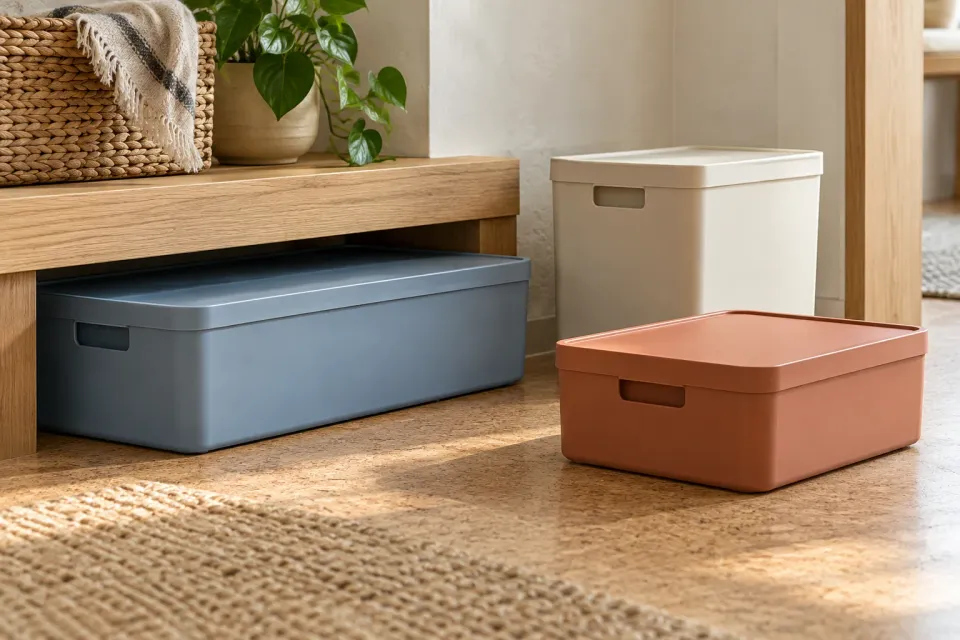
A visitor follows a ChatGPT ad for storage in small spaces and sees three boxes on the retailer’s website. Every product card promises smart organisation. The prices differ, but the cards omit the dimensions that determine whether a box fits under the visitor’s shelf. The design presents a choice without the information needed to make it.
Give each card a specific job: help the customer decide which product deserves a closer look. This applies to cards in a category, a selected collection or a related-products area on your website. A useful card is a short decision summary, with a clear path to the detail still required.
Establish which card you are editing
OpenAI’s Campaign Management documentation describes a standard chat_card ad with creative content and a landing-page URL. Its Product Feeds guide explains that the selected product supplies the image and destination URL for a product-ad template.
The cards discussed here belong to the advertiser’s own website. Organise them around the customer’s product choice while keeping the advertised item recognisable. Recommendations about a website card’s fields or buttons are not instructions for configuring an ad format inside ChatGPT.
Choose the difference the visitor needs to see
Start with the advertised offer and the products actually displayed at the destination. What characteristic makes one alternative appropriate and another unsuitable? Depending on the category, it might be dimensions, material, connection type or a specific use. Answer that question before filling the available space with promotional badges.
Choose a small shared set of fields for the product group. Storage boxes might need external dimensions; bags might need capacity and dimensions. Keep each comparable attribute in the same position across neighbouring cards. That gives the list a readable structure without forcing every category to use identical information.
When a decisive attribute is missing, verify it against the product record. Do not replace the gap with a reassuring adjective. If suitability needs an individual check, explain what the visitor should inspect on the detail page. The short description should expose the next necessary question rather than conceal it.
Work through a hypothetical storage collection
Imagine a retailer promoting storage for tight spaces. These fictional products illustrate how a card can distinguish alternatives. Their dimensions are invented for this editorial example and do not describe real merchandise.
| Product name on the card | External dimensions: width × depth × height | Next action |
|---|---|---|
| Low storage box | 40 × 30 × 15 cm | View dimensions and details |
| Shallow storage box | 40 × 20 × 30 cm | View dimensions and details |
| Tall storage box | 40 × 30 × 35 cm | View dimensions and details |
All three boxes are 40 cm wide. The shallow box has the smallest depth, 20 cm, while the tall box has the greatest height, 35 cm. The low box is 15 cm high. Keep width × depth × height visible when these values appear on separate cards as well. Use the same units and meaning throughout the list.
Add the correct image and current price for each item. The card can then support an initial choice while the detail page explains construction, care and materials. Its purpose is to give someone a reason to inspect a suitable option and a reason to leave an unsuitable one behind.
What belongs on the product card?
- Identify
Name and image describe the same item or a clearly identified variant group.
- Distinguish
Show width × depth × height so low, shallow and tall describe the correct dimension.
Checkpoint - Understand the price
Make clear which item and configuration the price describes.
- Continue
Let the action explain whether the customer will read more, choose a variant or buy.
Checkpoint
Keep the name and image attached to one identity
Put the distinguishing information where it remains visible. A long collection name followed by “low” at the very end can make different products look identical when titles wrap or shorten. Retain a model name when it helps recognition, but do not let it crowd out the relevant distinction.
Match the image to the product represented by the name and price. If a lifestyle photograph includes separately sold accessories, make the purchase identity clear. A shared photograph should not quietly stand in for several visibly different variants.
Colour swatches and small icons can supplement the explanation, but should not carry the entire identity. Name the selected colour or variant when it affects the image or price. If the card represents a group of variants, make it clear that the next step includes a choice.
Give price and availability enough context
Check that the price belongs to the item the card describes. A starting price for a variant group must not appear to be a fixed price for a larger model pictured above it. When configuration is necessary before the price is known, prepare the customer for that next action.
If packaging changes what the customer buys, show a concise pack description. The guide to explaining pack quantity covers the underlying quantity decisions. The card only needs enough context to make the priced product understandable without turning into a calculator.
Include a relevant availability message where it helps the choice. The guide to showing stock status covers the different stock conditions. A card representing a particular variant should not borrow a broad availability claim that is only true for other products in the family.
Name the action that is actually next
“View product” suits a card that leads to more detail. “Choose size” prepares the visitor for a missing selection. A purchase action needs to make clear which item it adds. Avoid identical purchase wording across cards that send the customer into different kinds of steps.
Review the card on a narrow screen. Is the decisive characteristic still visible? Can the next action be understood without hovering over the image? Check long names and price labels as well, so that making the grid visually uniform does not hide necessary information.
Review the choice across the whole group
Ask a colleague to choose a box for a specified shelf using the example cards. Ask what informed the choice and what remains uncertain. A concrete explanation reveals more about the content than a general opinion that the grid looks attractive.
Then compare the name, image, attributes, price and destination against the same product record. The order of cards is a separate decision, covered in the guide to explaining product sorting. The card review is complete when a visitor can identify which item to open and give a reason, without someone translating the information for them.
Sources and scope
Select the concise information that product cards on an advertiser’s website need so visitors can identify, compare and open a relevant product.
Working methods and examples are editorial suggestions. Check current platform requirements and available features before implementation.