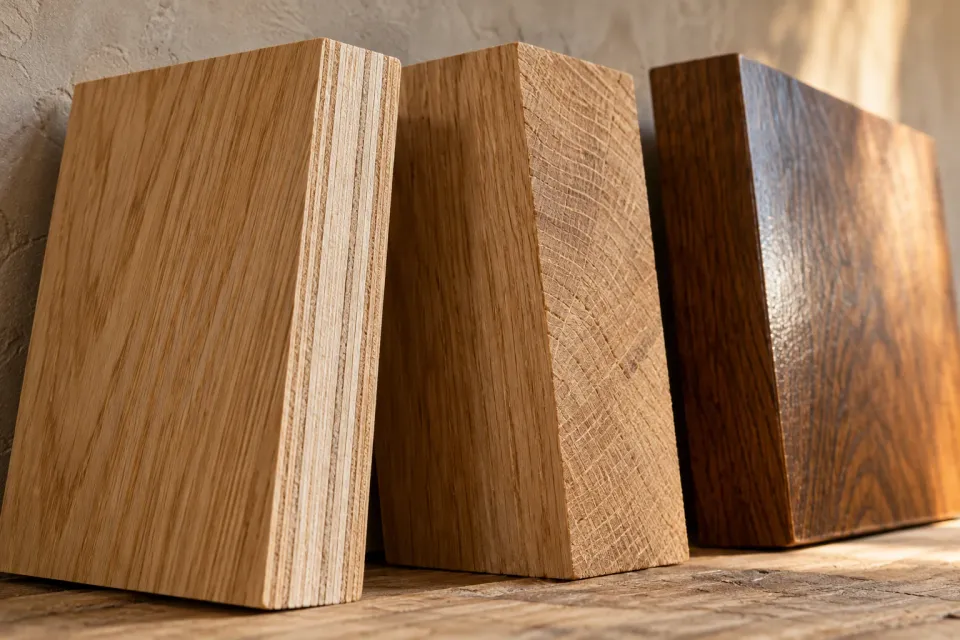
A customer follows a ChatGPT ad for an oak table. The product page offers a natural colour option and the word premium. The customer can see how the table was photographed, but still cannot tell what the top contains or how its surface is treated. The paid click has produced another guess instead of a useful product decision.
Material copy should resolve that uncertainty. Separate composition, visible surface and finish, then explain the consequences that the product evidence supports. Start with the advertised item and the variant that opens. A general materials guide for the whole store cannot replace a clear answer about the product the customer is considering.
Describe components before polishing the wording
Create a small working record that gives each important component its own material description. For furniture, that might cover the top, base and fittings. For a bag, it could cover the outer fabric, lining and details. Choose components according to their relevance to the purchase, rather than reproducing every row in a supplier database.
State composition as precisely as the documentation permits. If you only know the outer fabric, make clear that the description applies to that fabric. Percentages also need a defined scope: do they describe the fabric, filling or complete item? Do not manufacture an exact blend from a supplier’s broad material label.
Keep colour names separate from composition. A variant called oak needs clarification when the word describes an appearance. Customers should be able to identify whether a term means the underlying material, a surface layer or a colour without interpreting photographs or internal stock codes.
Distinguish construction from finish
Consider a hypothetical table whose verified product record specifies a panel core, oak veneer and a lacquered surface. The page can present those three facts together. Compressing everything into oak table leaves the construction unclear. Describing it as solid wood would change the underlying fact.
Give the finish its own sentence or labelled entry. Oiled, lacquered, coated and untreated are not interchangeable editorial choices. When the evidence does not identify the treatment, the product owner needs to resolve that gap before the page makes a precise statement.
Avoid drawing broad performance conclusions from the material name. Scratch resistant, maintenance free and suitable for every setting are separate claims requiring evidence about the finished product. A component list does not automatically establish them. Use the approach to placing evidence near a claim when material copy also makes a promise about performance.
Four material questions before choosing a variant
- Composition
What is each important part made from, including beneath the visible surface?
- Finish
Which treatment or coating belongs to the selected variant?
- Experience
Which texture and feel can the available evidence support?
Checkpoint - Care decision
Which verified care implication does the customer need to accept before buying?
Checkpoint
Make variant differences visible
When the customer changes the finish, the material information should follow the selection. Shared copy must not continue describing an oiled version after another treatment has been selected. Put the current variant name close to the material details so the relationship can be checked.
Also review the address used by the ad. OpenAI documents a destination URL for standard ads; product ads obtain their destination from the feed. The advertiser therefore needs to check the connection between that address and the intended item. Campaign Management, Product Feeds.
Open that address directly, including in a fresh browser window. Check whether it selects the intended finish and whether the description remains correct without a previously saved customer preference. If the ad presents a particular finish but the page starts with another, correct or explain the handover. The broader guide to product feeds and catalogue preparation places this check within the catalogue workflow.
Let photographs illustrate the named material
A detail photograph can make a documented texture easier to understand. Label the component and variant it shows. If an image is a representative material sample, identify it as a sample instead of making it appear to depict every delivered item.
A short caption can connect the photograph with the material term. The customer can then move between the complete product and the relevant detail. However, the image should not carry the composition or treatment information on its own. A glossy photograph, for example, does not establish which coating was used.
Where variation is documented, explain what can vary and what the buyer actually selects. Are they choosing a named colour, a material finish or an individual item? Describe only variation that you can confirm for this product. A sweeping disclaimer that undermines every photograph and description leaves the customer with little usable information.
Turn care implications into a purchase decision
The material section does not need to reproduce the maintenance manual. Bring forward the verified implication that could change the purchase decision, then provide a clear route to the complete instructions. If the documented finish requires a recurring treatment, customers should discover that before ordering, rather than on a leaflet inside the package.
Keep the implication connected to its evidence. A hypothetical writing pattern is: this selected finish requires the care described in the manufacturer’s instructions, with a link to the correct instructions. Replace that general pattern with the actual action once it is verified. Do not invent maintenance intervals or cleaning products simply to make the copy more specific.
Provide a useful continuation when the requirement does not suit the customer. They might compare another finish or ask a material question before ordering. Explain why the alternative is relevant so the same unresolved concern does not simply move to another product.
Read the page as someone choosing a product
Ask a reviewer to follow the advertised product selection and answer four questions using only the page: what are the important components made from, which surface have I selected, what does the photograph show, and which care implication needs my decision? Record every answer that requires guessing. Correct the source information or its presentation at that point.
Finally, compare the language versions and selected variants against the same approved product record. Assign ownership for updates when a supplier changes composition or treatment. The description is ready when customers can choose a variant with informed expectations and the advertiser can identify the evidence for each material fact that matters.
Sources and scope
Help advertisers explain composition, finish and relevant care implications before a customer chooses a product variant after a paid ChatGPT ad click.
Working methods and examples are editorial suggestions. Check current platform requirements and available features before implementation.