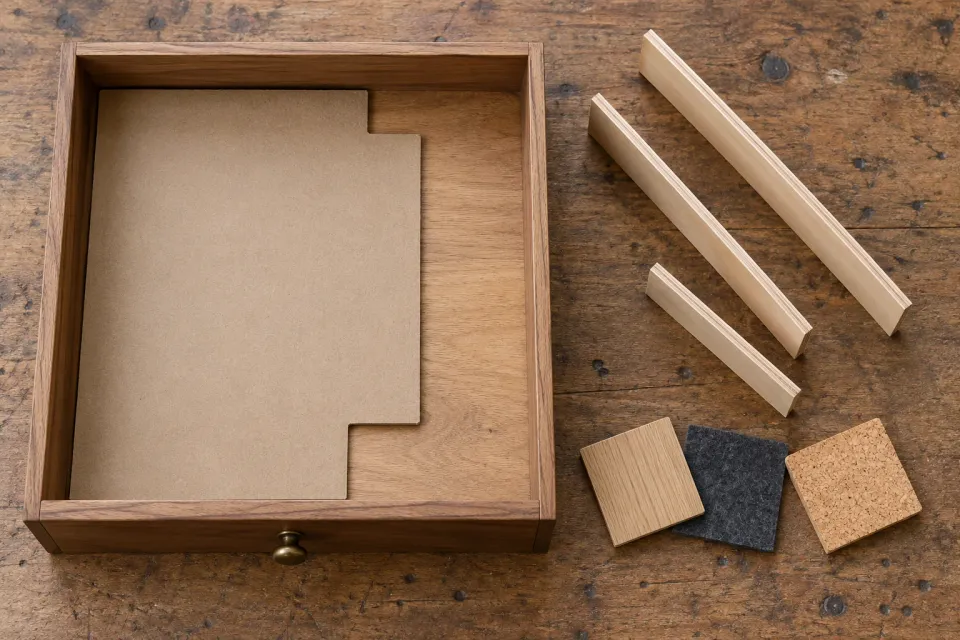
“We manufacture to your requirements” can attract someone with a loose idea and a buyer with approved drawings. They may need different kinds of help. Planning ChatGPT ads for custom manufacturing starts with deciding which inputs the business can actually work from. Otherwise, an ad can appear to sell design assistance when the offer covers production from approved information.
This guide uses a fictional supplier of custom storage inserts for drawers. The buyer wants to organise objects within an existing space. The examples establish no real material properties, manufacturing tolerances or delivery times. The task is to define the campaign offer, rather than design the insert or specify an order form.
Choose the enquiry the ad invites
Ask the person who assesses manufacturing requests what they need to give a meaningful first response. Is a description of the use enough? Is a dimensioned sketch required? Must the buyer already have an approved drawing? Those answers determine the offer the ad can introduce.
A supplier that helps prepare the specification can describe discussing an idea or reviewing a space requirement, provided that work is included. A supplier that only manufactures from customer specifications needs to make that starting condition understandable. “From idea to finished solution” would add a separate service. If the earlier work involves testing a design, define what the prototype engagement establishes before treating its output as manufacturing input.
Write a concrete acceptance condition in the brief: “The initial assessment uses the buyer’s sketch and description of the intended use.” Have the supplier confirm it. The sentence should describe today’s offer, rather than work a salesperson might investigate for an unusual project.
Collect the inputs that change the assessment
Not every technical detail belongs in a campaign brief. Include the information that determines whether a request fits the offer and what can happen next. For a storage insert, this might concern the available space, the objects being organised, a material preference and whether the request is for one item or recurring production.
Explain the role of each input. The available space constrains the outer shape. How the objects are used affects what the buyer needs to reach. The material preference might be a fixed requirement or an unresolved choice. Quantity helps establish the scope without inventing a minimum order for the ad.
Do not invent values to make the brief appear complete. An unknown dimension is an open question. A plausible example does not become a verified requirement when someone types it into a document. Use the practical customer constraints guide to separate essential conditions from preferences before they become advertising messages.
Mark what is known, selectable and unresolved
| Brief entry | Status in the fictional case | Consequence for the message |
|---|---|---|
| The insert must fit an existing drawer | Known use requirement | Custom dimensions may be a relevant starting point |
| The buyer has a dimensioned sketch | Confirmed input | The ad can invite a review of that sketch |
| Surface appearance has not been chosen | Open choice | Do not describe a particular finish as settled |
| The supplier accepts the design | Not yet assessed | Do not promise production before review |
These distinctions stop the buyer’s wishes becoming the supplier’s promises. “Needs an insert that fits” describes a task. “We can manufacture this insert” is a conclusion requiring assessment. A useful campaign brief separates the two even though both concern the same object.
Record who can resolve an open question. The buyer may need to check the existing space, while the supplier needs to assess whether the proposal falls within its offer. The ad should not suggest that all responsibility has transferred to the manufacturer.
Which input can the offer accept?
- Need without a sketch
Discussing the use requires that this assistance is actually offered.
- Dimensioned sketch
Invite a review when this is an accepted starting input.
Checkpoint - Unresolved material choice
Keep the choice open until the responsible party assesses it.
- Unassessed manufacturability
A sketch does not mean production has been accepted.
Reconsider
Make the boundary of custom work visible
“Custom” can mean choosing within an existing format, changing the dimensions of a known product or creating a completely new configuration. Describe the version the business actually offers. Selectable standard sizes are different from unrestricted design work.
For this example, “Storage inserts from your dimensioned sketch” could be a useful direction if the supplier accepts that input. “Any shape you need” implies a much broader capability. Keep material and processing claims within what has been verified for the advertised offer as well.
If drawing preparation, material selection or revisions are separate services, mark them separately in the working brief. Use the service scope guide when those boundaries need to appear in context hints. An attractive finished example does not establish that all development behind it is included.
Name the first meaningful action
“Request a review of your sketch” and “Order a finished insert” describe different steps. Choose the step the supplier can offer when someone responds to the ad. An enquiry does not automatically mean that the work can be accepted or that every requirement has been agreed.
Write what will be examined and what the response can address. Here, the next step might be reviewing whether the supplied information fits the manufacturer’s offer. Avoid “Get an instant price” if someone first needs to clarify material, scope or missing dimensions. The call-to-action commitment guide helps preserve that distinction.
Do not describe an incomplete request as a ready production order just because the buyer has attached a drawing. The drawing may leave relevant questions unanswered. The useful signal is what has been established, not the presence of a document with a technical appearance.
Read the brief from both sides
Ask one person to read as the buyer and another as the person assessing the request. The buyer should understand what must already be known. The supplier should recognise the work the ad promises to accept. If their interpretations differ, define the offer more carefully before polishing the wording.
OpenAI places context hints at ad-group level. An ad preview shows appearance, rather than confirming serving eligibility. These functions do not determine the buyer inputs the business requires. The brief should stand on its own: an identifiable manufacturing need, genuinely available inputs and a clear question the supplier can begin to assess. That gives the ad a recognisable invitation to the appropriate kind of enquiry.
Sources and scope
Define which buyer inputs a custom manufacturing offer can accept and make the ad message reflect the actual maturity of the enquiry.
Working methods and examples are editorial suggestions. Check current platform requirements and available features before implementation.