“We keep your equipment running” sounds like a simple offer. A prospective customer might read it as a promise of repairs, replacement parts, emergency attendance and uninterrupted operation. The business may actually sell scheduled visits for a limited set of machines. Those expectations need to be separated before the service becomes an advertisement on ChatGPT.
A service boundary is part of the offer itself. It determines what the advertisement introduces and which questions remain open. A company may legitimately supply several services, but each working brief should make clear what enquiry it is inviting and what must be assessed before an appointment or outcome can be confirmed.
Name the equipment and the activity
Write one sentence with two concrete parts: what receives attention and what the provider does during the visit. “Scheduled inspection of labelling equipment” is more bounded than “support for your entire production operation”. Add the actual equipment categories or models the company can assess.
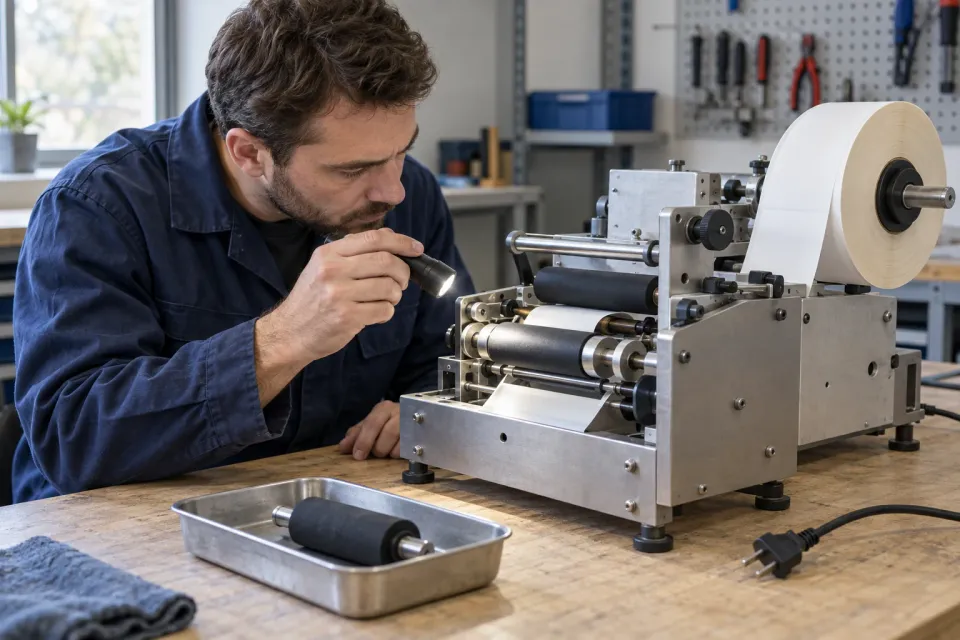
In a fictional example, a workshop offers scheduled servicing for selected labelling machines. It checks agreed components, cleans according to its own process and records observations. This is an invented commercial scenario, not a technical maintenance procedure or an account of completed work. The real provider must define the exact activities it supplies.
The message could introduce “planned servicing for labelling equipment”. If the workshop needs model information before accepting a job, the initial action should invite an equipment assessment. “Book servicing for any machine” does not accurately simplify that unresolved question. It changes the offer.
Keep scheduled work separate from an active interruption
A person planning maintenance for next month faces a different decision from someone dealing with a machine that has stopped today. That difference affects the relevant promise and whether the business can respond appropriately. Distinguish scheduled service from urgent diagnosis in the brief before writing either message.
Ask the delivery owner what any quoted response time means. It might refer to a reply, a provisional booking, a technician’s arrival or completed work. These stages should not collapse into “back up and running quickly” without support. An internal goal for answering enquiries is different from a promise made to the customer.
If urgent work is handled by a separate part of the business, record the appropriate route. The purpose is to prevent a planned maintenance package from being presented as a complete solution to an interruption already in progress. Clear scope can still leave room for a customer to ask whether another service is available.
Treat replacement parts as a separate decision
A visit can identify a worn component without including its replacement. Record whether parts, ordering, fitting and a return visit are included, optional or quoted separately. Check whether routine consumables are covered while other components are assessed after inspection.
The fictional workshop might provide inspection and documentation, then propose more substantial work separately. “Get a documented review to inform further maintenance” is a different offer from “we fix every fault on the first visit”. The latter assumes that the diagnosis and necessary resources will both be available.
Whether the customer should repair or replace the equipment is a separate question, covered in the guide to repair versus replacement decisions. This advertising brief should explain the maintenance provider’s commitment rather than trying to resolve the entire investment decision in one message.
One service visit does not include every outcome
- Scheduled inspection
Agreed checks and recorded observations are included in this example.
- Component replacement
More substantial work is quoted separately after assessment.
Checkpoint - Urgent restart
The same visit does not promise a resolved interruption.
Reconsider - Appropriate first step
Supply the model information so the workshop can assess the job.
Put the important boundary into the main proposition
Some limitations change the offer enough to influence the headline or description. A visit available only for one equipment family should not be introduced as universal machinery support. Other information, such as which documents to prepare, may belong in the next conversation.
Make two short lists: facts that directly change the customer’s expectation and facts that help the provider plan the work. Choose an accurate term for the most important boundary, such as “scheduled”, “for supported models” or “assessment before quotation”. Use these words because they describe the service, not because every maintenance advertisement needs the same qualifiers.
The guide to exclusions in ad copy is useful where a short message must carry an essential restriction. First try to write a main sentence that is true on its own. A broad headline does not become clear simply because several corrections appear further down.
Describe the task without promising delivery precision
OpenAI says context hints provide context rather than exact keywords. An editorial draft might describe “planning recurring maintenance for labelling machines in a small production operation”. That identifies work the service could support. It should not be interpreted as a guaranteed trigger for an ad impression.
Compare the draft with the service scope represented by hints. If the service area or equipment suitability is still unknown, the wording should not imply that either question has been settled. Use the provider’s actual assessment process to decide how far the message can go.
There is also a distinction between naming suitable equipment and claiming to recognise a customer’s exact situation. A factual description of the supported machine family is sufficient. The ad does not need to pretend that the advertiser already knows which unit has failed or what condition it is in.
Hand over an offer the delivery team recognises
Ask the person receiving enquiries to read the headline, description and first action together. Have them explain what a customer is likely to expect when making contact, then compare that interpretation with the service package. OpenAI describes an ad preview as an appearance check rather than proof of serving eligibility; a polished preview cannot establish the provider’s capacity either.
The finished brief should identify equipment, activities, important exclusions and information required before confirmation. Assign someone to maintain the message when a model is no longer supported or the service changes. With those boundaries in place, the advertisement can introduce a maintenance offer that is useful to the buyer and recognisable to the team expected to deliver it.
Sources and scope
Define the equipment, activities and response included in an advertised maintenance service without promising repair or uninterrupted operation.
Working methods and examples are editorial suggestions. Check current platform requirements and available features before implementation.